
Australia Subclass 189 Visa: Understanding the New Tier-Based Invitation System
Australia’s Skilled Independent (Subclass 189) visainvitation process has evolved. While the visa remains points-tested, theDepartment of Home Affairs now applies a tier-based prioritisation modelin combination with occupation ceilings to manage invitations morestrategically.
How Invitations Are Now Managed
The Department sets occupation ceilings each programyear. An occupation ceiling is the maximum number of invitations that can beissued for a specific occupation under Subclass 189. Once that ceiling isreached, no further invitations can be issued for that occupation until thenext program year.
In practice, this means that invitations are no longerpurely competitive across the entire SkillSelect pool. Instead, candidates areranked within their occupation, and the number of available invitationsdepends on how that occupation is prioritised.
The Tier-Based Prioritisation Model
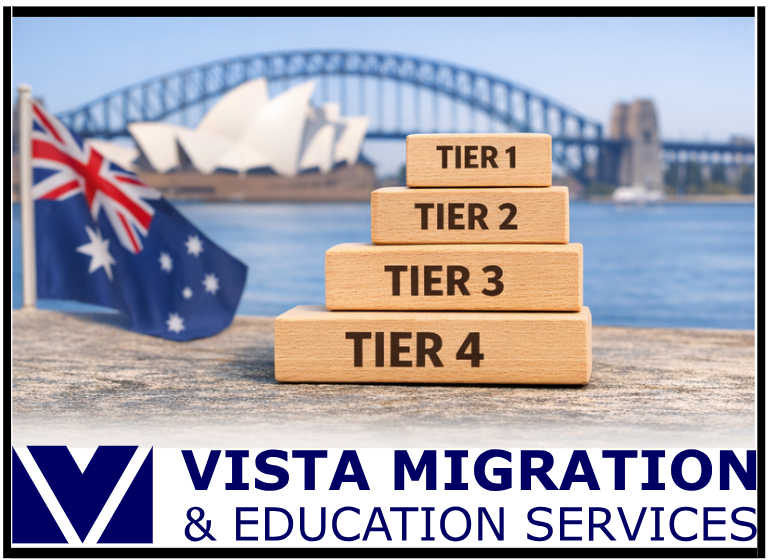
Under the internal model used by Home Affairs, occupationsare grouped into four tiers (Tier 1–4), each further divided into aand b subcategories, based on labour market demand and workforce scarcity:
- Tier 1a – Highest Priority: Critical shortages in essential fields such as medical specialists, allied health, and nursing sectors.
- Tier 1b – High Demand within Tier 1: Additional essential roles in medical and healthcare-related fields, supporting workforce sustainability.
- Tier 2a – High Priority: Key occupations in education, social work, and psychology with ongoing demand.
- Tier 2b – Moderate Demand within Tier 2: Supporting roles in education and human services are essential to community needs.
- Tier 3a – Moderate Priority: A broad range of skilled professions in engineering, architecture, management, sciences, and technical fields.
- Tier 3b – Lower Demand within Tier 3: Additional professional and technical occupations contributing to economic diversity.
- Tier 4a – Lower Priority: Occupations with high supply in accounting, ICT, software development, and culinary sectors.
- Tier 4b – Minimal Priority within Tier 4: Additional lower-demand occupations with limited invitation availability.
While points still determine ranking within an occupation, tierand sub-tier placement influence how many invitations are available and howquickly an occupation’s ceiling may be reached. For the full list ofoccupations, ClickHere
Alternatively can copy this link below
https://drive.google.com/file/d/13dbGVFryHAQSCkMobTMVClgqlR3eQv1j/view?usp=sharing
What This Means for Applicants
- High points alone may not guarantee an invitation if an occupation’s ceiling is limited or already filled.
- Applicants in higher-tier and sub-tier occupations generally have stronger prospects under Subclass 189.
- For lower-tier occupations, alternative pathways such as Subclass 190 (State Nomination) or Subclass 491 (Regional) may offer better outcomes.
Understanding both points and occupation priorityis now essential when planning a skilled migration strategy
*Tier 1–4occupation list for the Subclass 189 Skilled Independent visa based on theDepartment of Home Affairs internal policy minute released under Freedom ofInformation
